
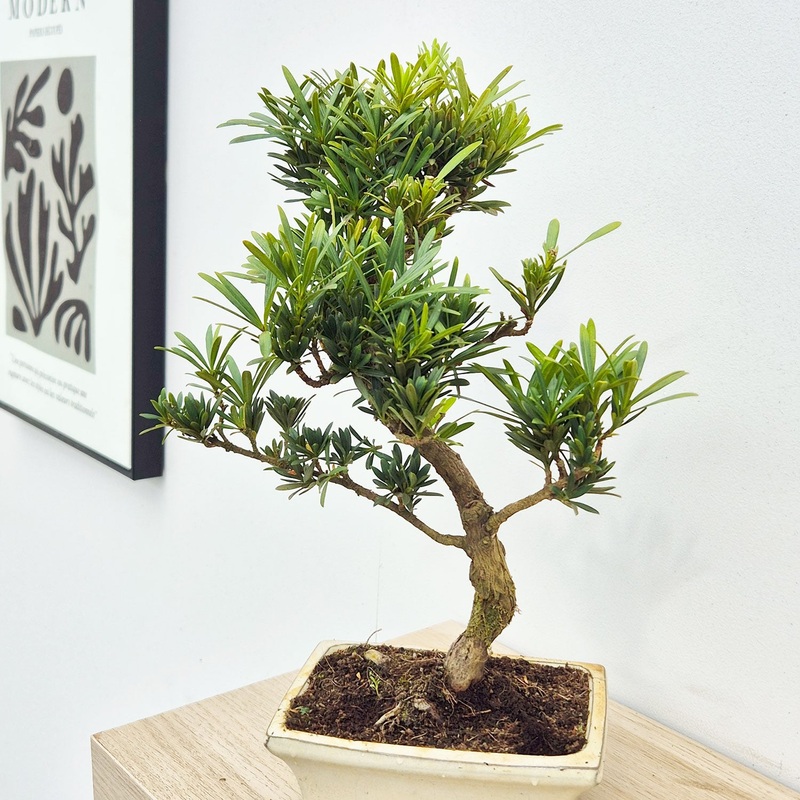
25 – 35cm Podocarpus Chinensis Bonsai Tree in pot 15cm Ceramic Pot House Plant
ThePodocarpus chinensis, also known as the Chinese Yew, is an elegant evergreen conifer that lends itself beautifully to bonsai cultivation. Unlike true yews (Taxus), Podocarpus belongs to a distinct family of conifers and is prized for its graceful, narro
ThePodocarpus chinensis, also known as the Chinese Yew, is an elegant evergreen conifer that lends itself beautifully to bonsai cultivation. Unlike true yews (Taxus), Podocarpus belongs to a distinct family of conifers and is prized for its graceful, narrow, leathery green leaves arranged in neat, soft sprays along slender branches.
When trained as a bonsai, Podocarpus chinensis develops an attractive, upright trunk with natural taper, often showcasing gently layered foliage pads that give it a majestic, aged look. Its subtle evergreen character, refined foliage, and the ability to be shaped into classic bonsai styles such as formal upright, informal upright, or even multi-trunk make it highly sought-after.
Podocarpus chinensis is often chosen for indoor bonsai display in temperate regions but also does well outdoors in milder climates, provided it is protected from severe frost. It offers year-round interest and is appreciated by enthusiasts for its slower, manageable growth and long lifespan.
Detailed Care Guide for Podocarpus chinensis Bonsai
Light
-
Prefers bright, indirect light to full sun.
-
Outdoors in the UK, place in a position with morning sun and afternoon shade or dappled light.
-
If kept indoors, ensure it receives several hours of bright light daily, ideally near an east or south-facing window.
Watering
-
Likes to be kept evenly moist. Water thoroughly when the top of the soil starts to feel dry.
-
Avoid letting it dry out completely, but also ensure the soil is not constantly soggy.
-
In winter, reduce watering slightly to reflect slower growth.
Humidity & Temperature
-
Appreciates moderate humidity. In dry indoor environments, occasional misting or a humidity tray is beneficial.
-
Prefers temperatures between 1025C. Protect from cold draughts and freezing temperatures.
Soil & Repotting
-
Needs a free-draining bonsai soil, typically an akadama or grit-heavy mix to prevent waterlogging.
-
Repot every 23 years in spring, pruning roots moderately to maintain health and encourage a fine root system.
Feeding
-
Feed every 24 weeks during the growing season (spring through early autumn) with a balanced bonsai fertiliser.
-
Reduce or stop feeding in late autumn and winter.
Pruning & Wiring
-
Regular trimming helps maintain shape and encourages denser foliage. Pinch or trim new shoots to 23 sets of leaves.
-
Wiring can be done to shape branches but should be monitored carefully to avoid cutting into the bark. Best done in spring.
Pests & Problems
-
Generally trouble-free but watch for scale insects, aphids, or spider mites, especially indoors or during hot weather.
-
Ensure good air circulation to discourage fungal issues.
Additional Tips
-
Cleaning: Dust the foliage occasionally to keep it healthy and photosynthesising efficiently.
-
Transitioning: If moving between indoors and outdoors, do so gradually to avoid shock.
-
Winter: In colder areas of the UK, keep as an indoor or cold greenhouse bonsai during winter to protect from hard frost.
In summary:
The Podocarpus chinensis bonsai combines year-round evergreen beauty with an elegant, classical bonsai form. Slow-growing, easy to shape, and tolerant of pruning, its an excellent choice for beginners and enthusiasts alike. With bright light, careful watering, and occasional feeding, it will provide decades of serene, sculptural beauty.
Reviews
There are no reviews yet.