
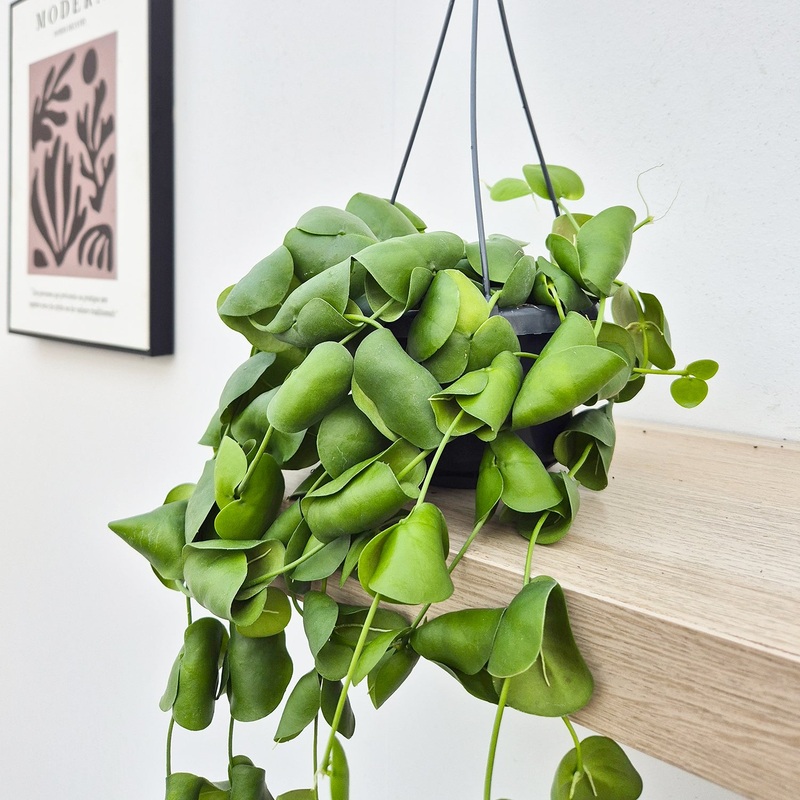
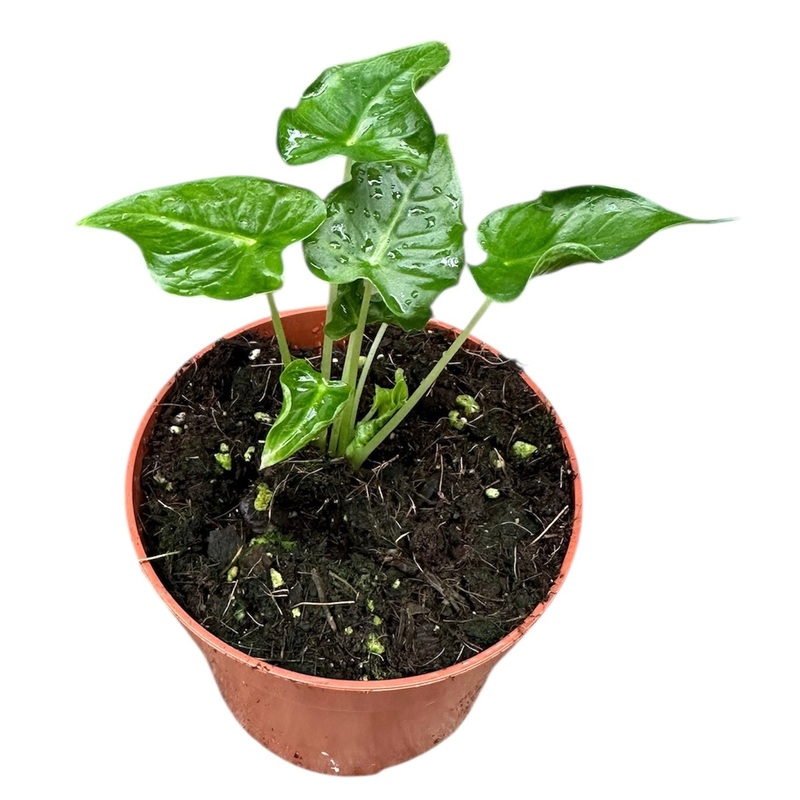
20 – 30cm Dischidia Platyphylla Houseplant in Hanging 14cm Pot
Dischidia platyphylla is a unique and fascinating trailing plant native to Southeast Asia, known for its thick, fleshy, and elongated leaves that resemble flattened ovals. The leaves are a lush green, slightly succulent, and grow in pairs along the stem, g
Dischidia platyphylla is a unique and fascinating trailing plant native to Southeast Asia, known for its thick, fleshy, and elongated leaves that resemble flattened ovals. The leaves are a lush green, slightly succulent, and grow in pairs along the stem, giving the plant a layered and textured appearance. As an epiphyte, it naturally grows on tree trunks and branches, absorbing moisture and nutrients from the air.
This trailing or climbing vine is perfect for hanging baskets, mounted displays, or trellises. Its low-maintenance requirements and striking foliage make it a popular choice for houseplant enthusiasts and collectors.
Care Guide for Dischidia Platyphylla
1. Light
- Ideal Conditions: Bright, indirect light is ideal for healthy growth and vibrant foliage.
- Tolerances: It can adapt to moderate light but will grow slower.
- Avoid: Prolonged direct sunlight, which can scorch its leaves.
2. Watering
- Frequency: Water when the soil is almost dry, but avoid letting it dry out completely.
- Method: Water thoroughly, ensuring that excess water drains completely.
- Avoid: Overwatering, as the plant is prone to root rot.
3. Humidity
- Ideal Levels: Prefers high humidity (6080%) to mimic its natural epiphytic environment.
- Enhancements: Use a humidifier, mist occasionally, or place near other tropical plants to maintain higher humidity levels.
4. Temperature
- Optimal Range: 1826C (6580F).
- Avoid: Cold drafts, temperatures below 12C (54F), or sudden temperature changes.
5. Soil
- Type: A well-draining and light mix, similar to that used for orchids or succulents.
- Best Mix: Combine orchid bark, perlite, and a small amount of peat moss or coconut coir.
6. Fertiliser
- Schedule: Feed every 46 weeks during the growing season (spring and summer) with a balanced liquid fertiliser diluted to half strength.
- Avoid: Fertilising during the dormant winter months.
7. Pruning
- Purpose: Prune to maintain shape and remove any yellow or damaged leaves.
- Method: Use clean scissors or pruning shears to cut back overgrown stems.
8. Repotting
- Frequency: Repot every 23 years, or when the plant becomes root-bound.
- Best Time: Spring, before the growing season begins.
9. Propagation
- Method: Propagate by stem cuttings.
- Take a cutting with at least 23 nodes.
- Root in water, sphagnum moss, or a moist, well-draining soil mix.
- Maintain high humidity and indirect light during propagation.
10. Common Issues
- Wrinkled Leaves: Often a sign of underwatering; water more consistently.
- Yellowing Leaves: Typically caused by overwatering or poor drainage.
- Pests: Watch for mealybugs, scale, and spider mites. Treat infestations with neem oil or insecticidal soap.
Special Tips
- Mounting: Dischidia platyphylla thrives when mounted on wood or cork, as it mimics its natural habitat.
- Light Rotation: Rotate the plant periodically to encourage even growth.
- Avoid Waterlogging: Ensure proper drainage, as its semi-succulent nature makes it sensitive to overly wet conditions.
Dischidia platyphylla is a charming and adaptable plant that brings a touch of the exotic to your indoor garden. With the right care, it will thrive and make a beautiful, low-maintenance addition to your collection!
Reviews
There are no reviews yet.