
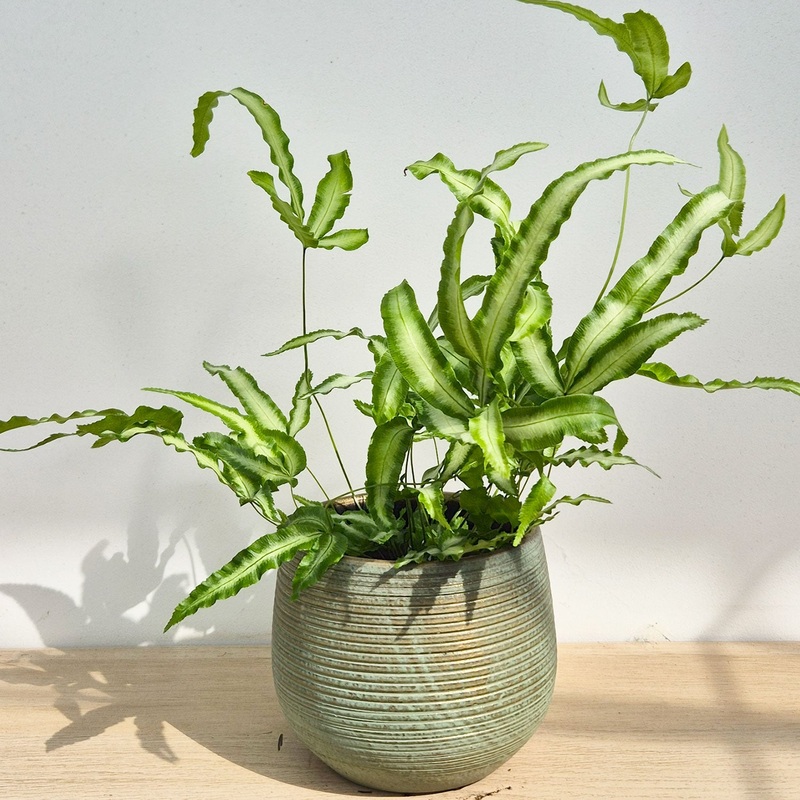
25 – 30cm Pteris Cretica Albo Fern 12cm Pot House Plant
The Pteris cretica Albo, also known as the Variegated Cretan Brake Fern, is a graceful houseplant with finely divided fronds marked by bold creamy-white central stripes. Its soft, airy foliage brings lightness and movement to any indoor space, making it an
The Pteris cretica Albo, also known as the Variegated Cretan Brake Fern, is a graceful houseplant with finely divided fronds marked by bold creamy-white central stripes. Its soft, airy foliage brings lightness and movement to any indoor space, making it an excellent choice for brightening shady corners or adding texture to a plant collection.
Compact yet eye-catching, this fern thrives in indoor environments with a little extra humidity and is well-suited to tabletops, plant stands, or as part of a mixed display. Its refined appearance and easy-going nature make it a favourite among both beginner and experienced plant owners.
Care Guide Pteris cretica Albo
Light
-
Prefers bright, indirect light but can tolerate partial shade.
-
Avoid direct sunlight, which can scorch delicate fronds.
Watering
-
Keep the soil consistently moist but not waterlogged.
-
Water when the top 12 cm of soil feels slightly dry.
-
Use room-temperature water for best results.
Humidity
-
Loves higher humidity levels.
-
Mist regularly, use a pebble tray, or place near a humidifier to maintain humidity, especially in heated rooms.
Temperature
-
Ideal range is 1624C.
-
Protect from draughts and avoid sudden temperature changes.
Soil
-
Plant in a well-draining, peat-free houseplant compost enriched with organic matter.
-
A mix designed for ferns will work well.
Feeding
-
Feed every 46 weeks in spring and summer with a diluted balanced liquid fertiliser.
-
Do not fertilise in autumn and winter when growth slows.
Pruning & Maintenance
-
Remove any brown or damaged fronds at the base to encourage new growth.
-
Rotate the plant regularly for even growth.
Pests & Problems
-
Generally pest-free, but watch for aphids or scale.
-
Browning tips are often caused by low humidity or underwatering.
Reviews
There are no reviews yet.